
Planting guide
The three shapes
A border like this looks complicated. It is built from three shapes, and repeating them is what makes the planting look designed.
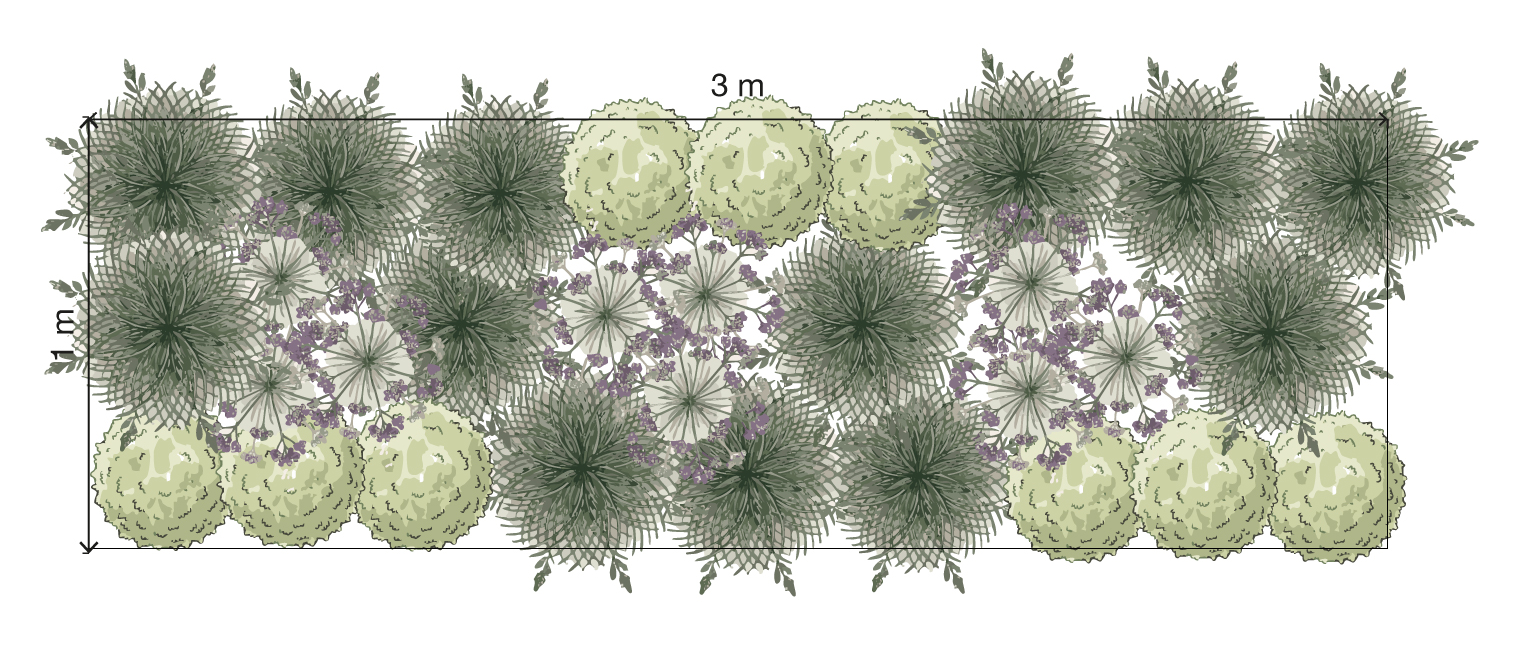
Top view, 3 m × 1 m. The three shapes, repeated. Made with digital and AI tools, then corrected and sized by a landscape architect.
Illustration credit: Garden Pal
PDF, with a free Garden Pal account
The plan and front-view symbols used in this guide, exclusive to Garden Pal.
The three shapes
One for winter, one for the wind, one for summer. The cushion holds the bed when the other two are quiet. The fountain moves. The float brings the colour, then goes.
- The cushion — A low, evergreen mound that covers the ground and holds the bed together through winter.
- The fountain — Something grass-like that arches and moves. Repeat it in odd numbers and it gives the bed its rhythm.
- The float — Tall, airy, see-through stems that bring the summer colour, then die back.
Side view and top view
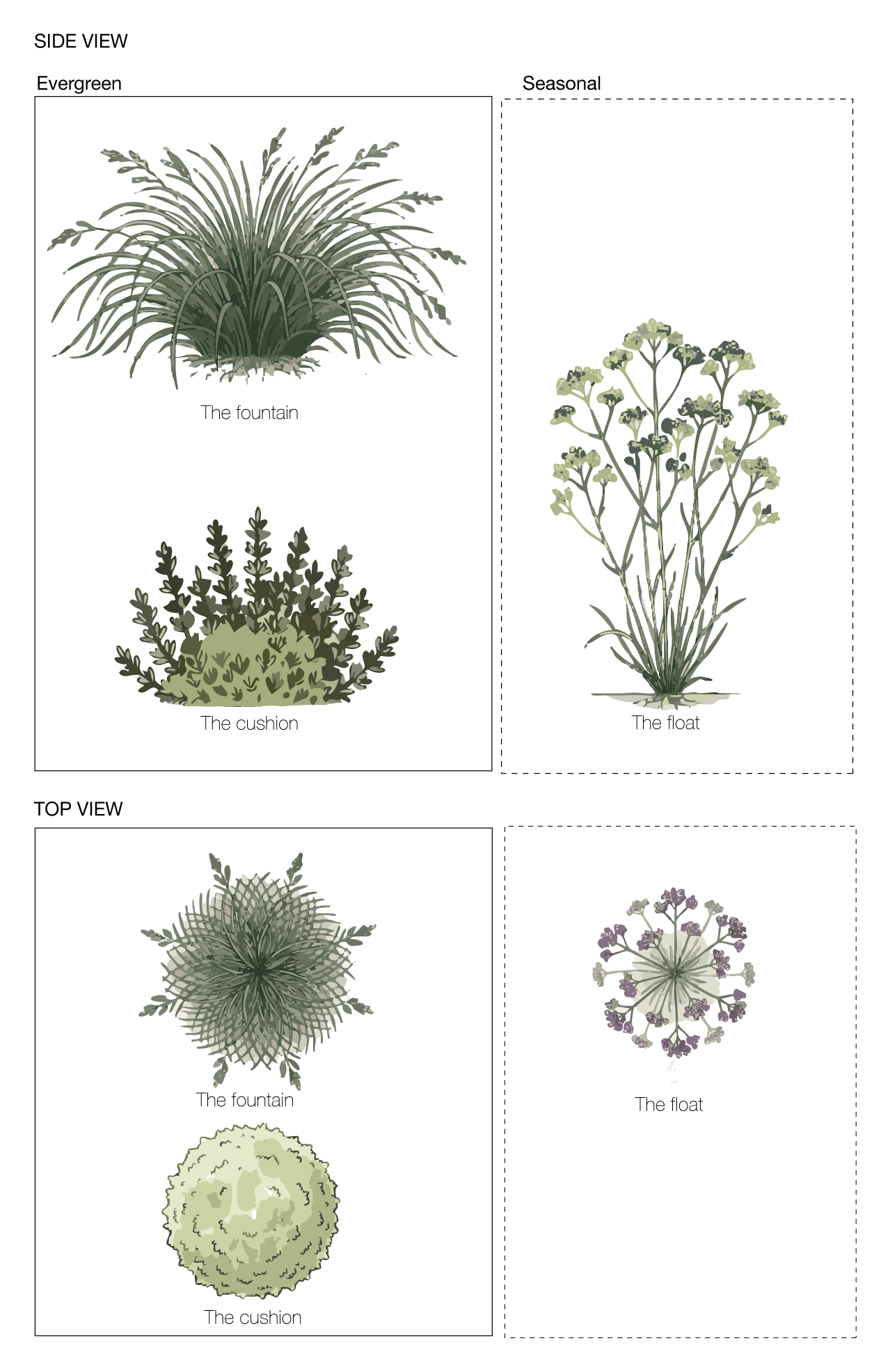
The cushion and the fountain stay. The float is seasonal.
Illustration credit: Garden Pal
Repeat them in odd numbers
Then repeat them. One of everything looks like clutter. The same plant again and again looks designed. It is also what makes this kind of planting feel so calm.
The fountain is the shape to repeat in odd numbers: three, five or seven. An odd count keeps the rhythm. Repeat the cushion and the float as groups of the same shape, not as a single plant of each.
The repeated bed
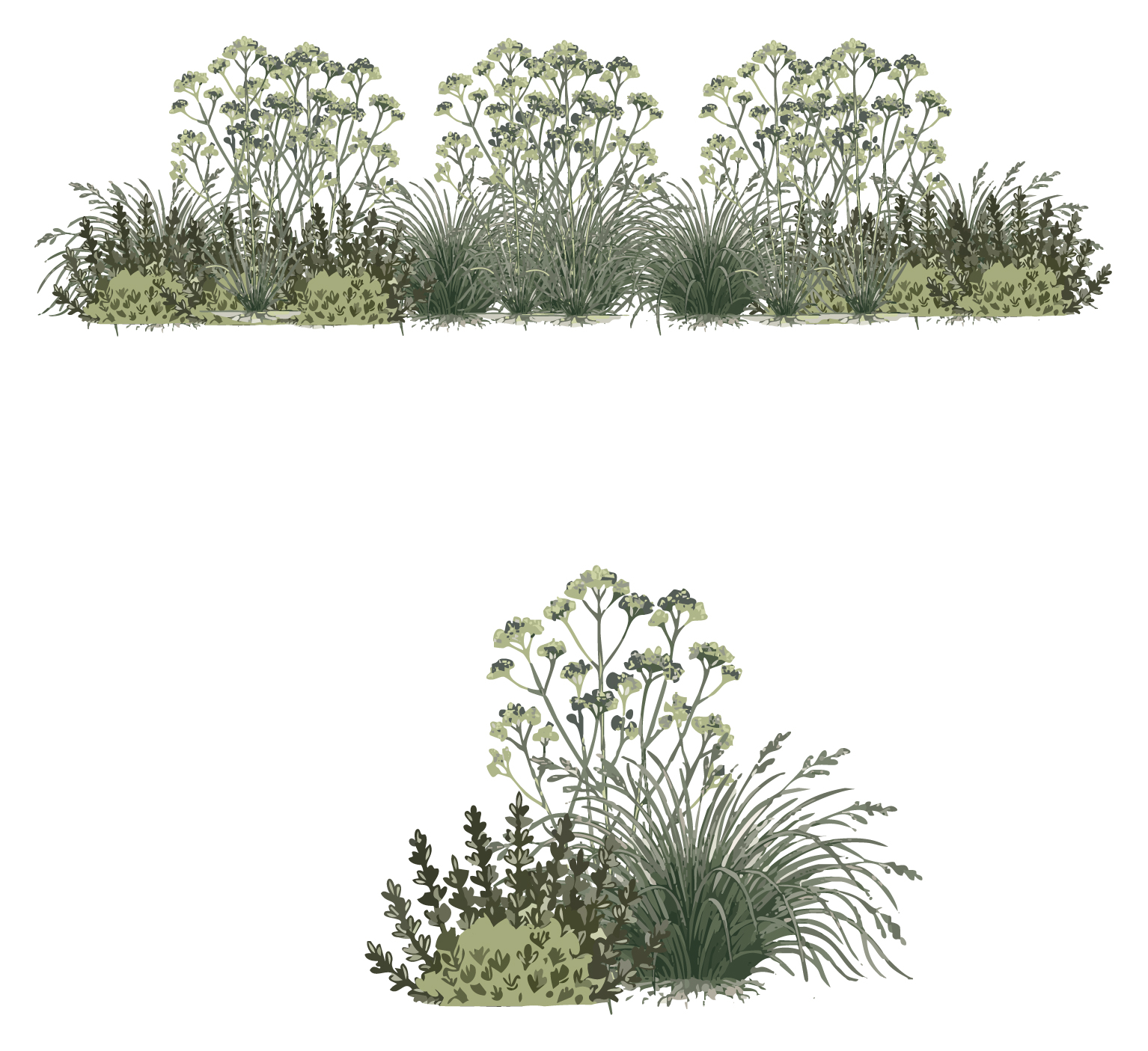
Side view of the repeated bed, and one group of the three shapes.
Illustration credit: Garden Pal
The plan seen from above
Top view of a 3 m × 1 m bed.
Illustration credit: Garden Pal
The shapes stay the same
Seen from above, one way to repeat the shapes is a bed 3 m × 1 m. The drawing is only the cushion, the fountain and the float, used again and again. It is not a list of species, and it is not the only size the shapes can fill.
The shapes stay the same in sun, in shade, and in a city courtyard. A cushion is still a low evergreen mound. A fountain still arches and moves. A float is still tall and airy, and it still dies back after its summer colour.
What changes is which plants can fill those shapes where you are. The same drawing works in more than one garden. The plants do not.
Choosing plants for your soil and light
Which plants fill the shapes depends on your soil and light. Choose plants that suit the conditions you already have. This guide does not change the soil.
Measure light at midsummer. Full sun is more than 6 hours of direct sun, partial shade is 3–6 hours, and full shade is less than 3 hours.
The plant finder can start each shape. Look for evergreen plants for the cushion, grass-like evergreen plants for the fountain, and plants that die back for the float. Then add the light and soil of your own spot. The sunny version, plant by plant, is a separate guide, and so is the shade version.
Good to know
One of everything
One of everything looks like clutter. The same plant again and again looks designed, and that repetition is what makes the planting feel calm.
Match the place
Pick plants for the soil and the light you already have. The shapes stay. The plants have to suit the spot.